অনুগ্রহ করে অপেক্ষা করুন। ছবি আটো ইন্সার্ট হবে।


Bangladesh Rifles soldiers in the headquarters in Dhaka surrendered their arms Thursday evening 35 hours after they had rebelled Wednesday morning against their officers from the army.
‘The rebels surrendered their arms and went back to the barracks,’ the home minister, Sahara Khatun, told reporters after coming out of the headquarters at 8:20pm.
She said peace was restored to the BDR headquarters after all the soldiers had deposited their arms and ammunition to the armoury.
Several hundred soldiers surrendered hours after the prime minister, Sheikh Hasina, had shortly after 2:00pm warned tough action against them followed by reinforcement of troops deployment around the BDR headquarters.
‘The key to the armoury is now with me. The police have been invested with the charge of looking after the armoury,’ said the home minister, who had been at a lengthy meeting with the rebels inside the headquarters since afternoon.
The police launched search inside the headquarters to find whether persons with injuries were still lying there. But they still could not establish the number of casualties in the rebellion.
Fire service officials as part of a rescue operation entered the headquarters at about 10:00pm.
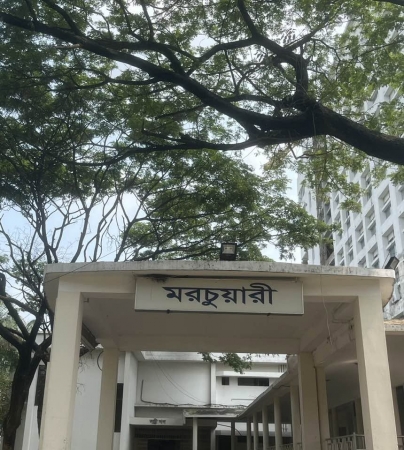
The police recovered bodies of six officers on Thursday and two on Wednesday from a storm sewer just outside the BDR headquarters.
A Rapid Action Battalion officer, coming out of the headquarters at night, said they had found nine bodies, including that of an officer and another of a young girl, inside. The seven others were of soldiers.
Twenty-two officers were rescued after the surrender of the rebels.
Relatives and colleagues identified five of the deceased found on Thursday as Brigadier General Abdul Bari, Colonel Abu Musa Ayun Kayser Ahmed, Colonel Zahid Hossain, Captain Mazharul Hayder and Colonel Anisuzzaman. One of the bodies was yet to be identified.
The bodies of Colonel Mujibul Huq and Lieutenant Colonel Enayet were found in the storm sewer on Wednesday.
Three civilians were also killed on Wednesday. Rickshaw-puller Amjad Ali, BBA student of a private university Khandaker Tariq Ali, 22, and street vendor Ridoy, 15, all injured during the firing died later in Dhaka Medical College Hospital.
Sources in the army said many of the officers who attended the Bangladesh Rifles’ annual conference on Wednesday were still missing.
The whereabouts of the BDR director general, Major General Shakil Ahmed heading a 67,000-strong force, and his family could not be established till Thursday night.
The police said that 42 suspected rebels were captured by the Rapid Action Battalion when the soldiers, in disguise, were trying to leave the headquarters. Many reportedly sought shelter in civilians’ houses outside the headquarters premises.
The suspects were being interrogated by the army personnel, who set up a makeshift control room in the Abahani playground at Dhanmondi.
After most soldiers had surrendered their arms by the evening, the army officers held hostage during the rebellion came out of the headquarters. They were received by their relatives, who had been wailing in the place for hours.
They said many of their colleagues were killed and some chopped into pieces and dumped in bins after they had been shot dead by the rebels during Wednesday’s firing.
The state minister for law, justice and parliamentary affairs, Quamrul Islam, said the death toll in the incident could rise up to 50. The home minister, however, could not give any details on the number of casualties.
The regular army troops advanced towards the headquarters as the authorities evacuated densely populated areas within three kilometres of the premises.
Tanks, cannons, mortars and armoured personnel carriers were also moved around the headquarters and the troops took position in every corner outside the headquarters.
The military vehicles were put on the roads and in by-lanes in the neighbouring residential area of Dhanmondi.
Immediately after Hasina’s address to the nation, aired on television, where she asked the rebels to surrender their arms and get back to the barracks, the movement of the army troops had intensified.
Her warning was followed by a series of hectic negotiations between the government and the rebels at different levels.
Hasina warned the rebellious border guards of tough action if they would refuse to lay down their weapons and to end a confrontation with their commanders, from the army.
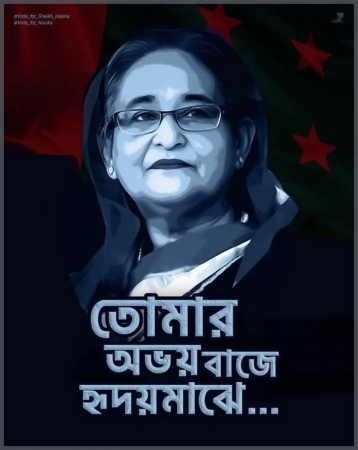
‘Please get back to the barracks, surrendering the weapons. I must, otherwise, make tough decisions in public interest,’ the prime minister said in her address a day inside the rebellion which resulted from the deprivation of their rights in service for years.
The rebels held hostage all the army officers after one of their fellows had been, as claimed by the rebels, shot dead by an army officer when the soldier was asking his chief why he (the officer) had not taken up their demands with the prime minister when she addressed the soldiers the day before on the occasion of the Rifles Week 2009.
The soldiers took control of the entire headquarters after the BDR director general, Major General Shakil Ahmed, had allegedly hurled abusive words at some of the soldiers, who had become unruly during the conference.
The soldiers then shouted at the army officers, including the chief of the force, on the stage and held them hostage. They also took control of the armoury and came out firing inside the headquarters.
In her speech, the prime minister also called on the border guards to shun the path of confrontation and restore discipline and maintain the chain of command.
‘I am not in favour of applying force. I, rather, believe in negotiations to resolve crises. But, please, do not take any steps which could force me take tough action to control the situation,’ Hasina said.
She gave the address a few minutes after the 2:00pm deadline set for the rebels to surrender, but some gunshots were heard inside the headquarters.
The soldiers had reportedly sought more time as a government negotiation team approached their headquarters for fresh discussions. A 40-minute extension to the deadline also failed to make the surrender happen.
The border guards started surrendering their weapons early Thursday after a 19-hour standoff, but some refused to lay down their arms despite being granted a general amnesty by the prime minister.
They said they had feared retaliation from the regular army troops against whom they had fought since Wednesday morning.
Emergency meetings of the council of ministers and senior leaders of the Awami League-led ruling alliance reviewed the situation in the morning, calling on all to show restraints. Hasina also met the chiefs of the three services of the Armed Forces.
Reports from outside the capital said border guards had opened fire in several other sector headquarters and camps in a number of districts, but no casualties were reported.
The soldiers outside the capital fired thousands of gunshots to panic people and blocked several highways.
As rumours of rebellion by border guards across the country ran high, the government switched off mobile networks outside Dhaka.
Several efforts to end the standoff failed on the first day as the rebels demanded removal of the officers and gunfire continued overnight. Most of the 5,000 soldiers, then present inside the headquarters, rebelled against their officers.
Shopping complexes, schools and roads around the headquarters were closed for the second day amid heightened security. The people across the city passed a tensed time on Thursday.
Panicked by the happenings, several thousand people gathered around the BDR headquarters to see how the security forces could contain the situation.
Calling on the soldiers to shun the path of fighting, a crowd of citizens held a rally holding placards in the Jigatala crossing.